The Five Best Flowers for Newbies to Keep Alive
Newbie flower growers often worry about not being able to keep them alive, which knocks their self-confidence. Don't fret, today we recommend the five flowers that are the best for newbies to keep alive, so that you can easily start the journey of keeping flowers and enjoy the beauty of the flowers.
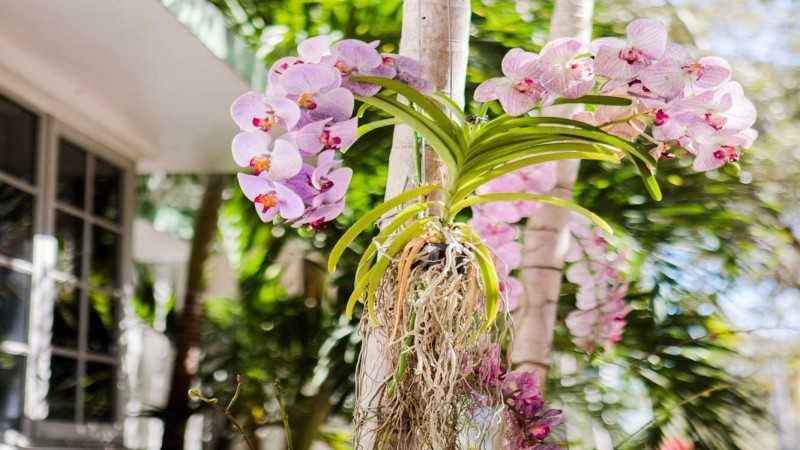
Hanging Orchids: Elegant Air Defenders
The hanging orchid is almost a “standard” flower in every household, and it is simply a “dream flower” for novices. Getting a hanging orchid is very simple; you can head to the flower market and carefully select a pot, or cut a side branch with roots from a friend or relative's home, insert it into moist soil, and it won't take long for it to take root and grow in its new environment.
The leaves of the orchid are slender and luxuriant, and its natural drooping posture is like a green waterfall, full of dynamic beauty. When it reaches a certain stage of growth, it will pull out a slender flower stem, on which not only will bloom small and delicate white flowers, but also will sprout many small side buds.
These small side shoots grow up and hang outside the pot, forming a unique hanging pot landscape, adding a unique flavor to the home environment.
Tiger Balm: Simple and Atmospheric Purification Expert
Tiger Balm leaves are thick and sturdy, with unique tiger stripes on the surface, giving people a sense of simplicity and atmosphere. It has many varieties, the height from dozens of centimeters to more than a meter, will be planted in a combination of tiger lily in a pot, can create a more beautiful visual effect.
And the tiger lily is a leader in purifying the air, it can absorb a variety of harmful substances in the air, releasing oxygen, very suitable for placement in the living room, bedroom and other indoor spaces.
The tiger lily is adaptable to soil, but in order for it to grow better, it is recommended to use loose, breathable and well-drained soil. You can use a mixture of decomposed leaf soil, garden soil and river sand in the ratio of 3:2:1, and add appropriate amount of organic fertilizer as the base fertilizer.
Tiger lily likes sunshine, but also has a certain degree of shade tolerance, placing it indoors in a brightly lit place or giving it 2-3 hours of direct light per day can meet its growth needs. Watering should adhere to the principle of “dry rather than wet”, because the leaves of the tiger orchid can store a lot of water, relatively drought-resistant, frequent watering will easily lead to root rot.
In general, water every 10-15 days in spring and fall. In summer, when the temperature is high and the water evaporates quickly, you can increase the number of watering times appropriately by watering once every 7-10 days, while in winter, you should reduce the watering time by watering once a month.
As for fertilization, in the growing season (spring and autumn), applying a dilute nitrogen, phosphorus and potassium compound fertilizer once a month can provide sufficient nutrients for the growth of tiger orchids. Tiger Balm is not hardy, so keep it warm in winter and keep the temperature above 5℃ to avoid frost damage to the plant.
Crabapple Orchid: Gorgeous Hanging Flower
The crabapple orchid is named for its connected stems that resemble the claws of a crab. Its flowers are rich in color, red, pink, white, yellow and other colors, and the flowers are bell-shaped and delicate when they open.
Crab claw orchid is a very suitable for hanging planting flowers, hanging it in front of the window or on the balcony, when the flowers are in full bloom, like a string of colorful lanterns, swaying in the wind, beautiful.
For beginners, it is a wise choice to buy grafted crabapple orchids. Common grafting rootstocks are cacti or triangular columns, which make crabapple orchids grow more robustly and bloom more easily after grafting.
Crabapple prefers a warm, humid and semi-shady environment, with a suitable growing temperature of 15-25℃. It is sensitive to light, give 6-8 hours of diffused light every day can, summer to avoid direct light, need to appropriate shade, winter to ensure sufficient light.
Jade tree: the resilience of the flower of longevity
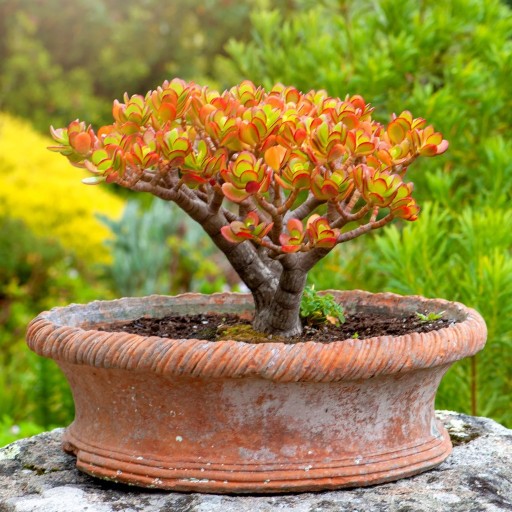
Jade tree belongs to the Sedum family of succulents, its plant grows quickly, can grow tall and straight, raised into an old pile, ancient and pale, very ornamental value. The leaves of the jade tree are thick and fleshy, ovoid in shape, with a smooth surface that is as warm as jade.
Moreover, the life span of the jade tree is very long, and with careful care, it can survive for decades or even hundreds of years, so it is also regarded as a symbol of longevity.
To care for the jade tree, first of all, we need to provide it with sufficient light, placed in the south-facing balcony or window, to ensure that 4-6 hours of direct light every day, which can make the leaves more full, the color is more emerald green.
If there is not enough light, the tree will tend to grow, with long, thin branches and thin leaves. The soil should be sandy with good air permeability and drainage, and can be prepared with a 2:2:1 mixture of leaf litter, garden soil and river sand.
Jade tree is drought-tolerant, watering should not be too frequent, follow the principle of “dry through watering”. In general, water every 7-10 days in spring and fall.
In summer, when the temperature is high and the water evaporates quickly, the frequency of watering can be increased appropriately, and the plant should be watered once every 5-7 days, but care should be taken to avoid watering in the high-temperature period in the middle of the day.
Winter temperatures are low, the growth of jade tree is slow, to reduce the watering, 15-20 days of watering once can be.
Longevity Flower: A festive flower with lots of flowers
The Longevity Flower is a small, delicate plant with fat, green leaves and dense, colorful flowers in red, pink, yellow, orange and white.
Its flowering period lasts from autumn to the following summer, up to several months long, and every time before and after the Spring Festival, longevity flowers will enter the full bloom period.
When the flowers are in full bloom, like a gorgeous flower ball, giving people a sense of joy and good fortune, so it is loved by the people, and is often used as a year-end flower placed in the home.
Longevity flowers like warm, moist and sunny environment, suitable for growing temperature of 15-25 ℃. In the spring, fall and winter, the longevity flower should be placed in a sunny place, so that it can fully receive light, which can promote the photosynthesis of the plant, so that the leaves are more green and the flowers are more brightly colored.
In summer, the sun is strong, it is necessary to appropriate shade, avoid strong direct light, so as not to burn the leaves.
Soil to choose loose, fertile, well-drained slightly acidic soil, you can use humus, peat soil and perlite in accordance with the ratio of 3:2:1 mixed preparation, can also be added to the soil in the appropriate amount of bone meal or organic fertilizer, to increase soil fertility.
During the flowering period, stop applying fertilizer to avoid fertilizer burns on the flowers. In addition, perennials grow rapidly and need to be pruned regularly in order to keep the plant looking beautiful.
After the flowers are gone, cut off the residual flowers and dead branches in time to avoid depleting the nutrients. At the same time, you can also carry out appropriate shaping and pruning of the plant, cut off the over-dense branches, long branches, to promote the sprouting of new branches, so that the plant is more plump.
These five kinds of flowers are not only good to keep alive, but also have their own characteristics, which can bring different beauty to the home. Which flowers are you most interested in, and which one are you going to get first to start your first experience with flowers?
 1
1 1
1OTHER NEWS
-
- Growing For The Planet: How Sustainable Gardening Practices Can Help To Mitigate Climate Change
- By Prodosh Kundu 28 Oct,2024
-
- Do you know these secrets of plants?
- By LH 18 Feb,2025
-
- How do you control pests and diseases in your garden
- By YL 12 Mar,2025

-
- How Organic Gardening Supplies Can Transform Your Garden And The Environment?
- By Prodosh Kundu 28 Oct,2024
-
- How terrible are carnivorous plants?
- By LH 12 Mar,2025
-
- Sustainable Gardening Starts With Organic Supplies
- By Prodosh Kundu 28 Oct,2024
-
- The Five Best Flowers for Newbies to Keep Alive
- By MTH 14 Mar,2025
-
- 15 kinds of flowers suitable for summer
- By LH 31 Mar,2025
-
- Hydroponic plants, gardening tips
- By LH 02 Apr,2025
-
- Here’s a complete guide on what you should prepare before planting your seeds.
- By Prodosh Kundu 18 Jul,2024
-
- The natural choice for indoor air purification five high-quality greenery recommendations
- By YL 14 Mar,2025
-
- Spring is here! Give Your Garden a New Look with These Gardening Tips
- By MTH 20 Feb,2025