How terrible are carnivorous plants?
It seems that in the eyes of most people, plants are quiet and gentle, growing silently with the help of sunlight and soil. However, there is a group of "rebels" in nature that subvert imagination - they feed on insects, small animals and even mammals, and perform silent killings with exquisite traps and deadly mucus.
These carnivorous plants are not only a miracle in the history of biological evolution, but also a "dark star" that has attracted much attention in the horticultural world. How terrible are their survival strategies? Let us unveil the mystery of these "plant killers".
Deadly traps: the hunting "arsenal" of carnivorous plants
The reason why carnivorous plants are so terrifying is due to their strange hunting methods. After millions of years of evolution, their "weapons" have formed an efficient and diverse killing system:
1. Mucus hell: the sweet trap of sundews
The Droseraceae family is the representative of carnivorous plants such as Cape sundews and silk-leaved sundews. Their leaves are covered with crystal glandular hairs, which secrete sweet mucus to attract insects.
Once the prey touches it, the mucus instantly sticks to it, and the leaves then curl up to wrap the prey, while secreting digestive enzymes to dissolve its protein. What's more terrifying is that the mucus of some sundews even contains toxins, which may cause burning pain or inflammation after human skin contact.
2. Death cage: Lightning hunting of Venus flytrap
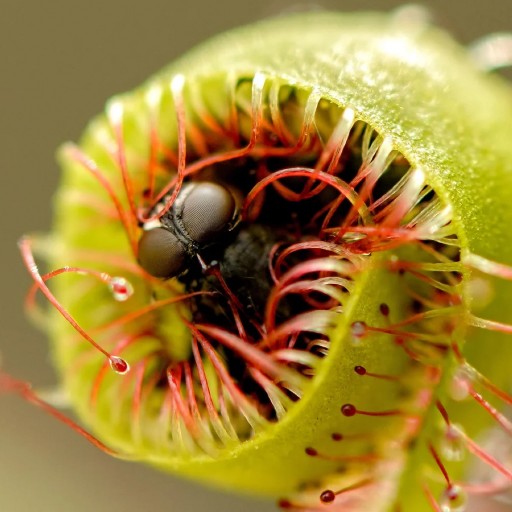
The edge of the Venus flytrap's insect trap is covered with sensitive tactile hairs. When the insect touches it twice in a row, the clamp will close within 0.1 seconds, trapping the prey in the "cage". Subsequently, the inner wall of the clamp secretes digestive fluid, and only debris remains after a few days.
This precise hunting mechanism can even distinguish between raindrops and living insects, and can be called the "intelligent killer" in the plant world.
3. Abyss slide: the digestive bottle of Nepenthes
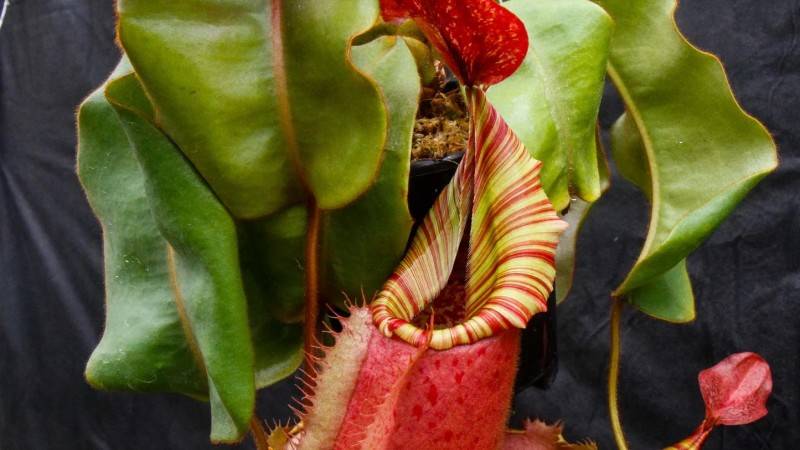
The insect trap of Nepenthes is shaped like a wine jug, and the mouth of the cage secretes nectar to lure insects. The inner wall of the cage is as smooth as a mirror. Once the prey slides in, it falls into the liquid pool filled with digestive enzymes at the bottom and is gradually decomposed and absorbed.
Even more shocking is that some giant pitchers (such as Nepenthes rajah) can have a pitcher capacity of up to 3.5 liters, and can even prey on small rodents.
4. Illusionary maze: the fatal confusion of Cobra pitcher plant
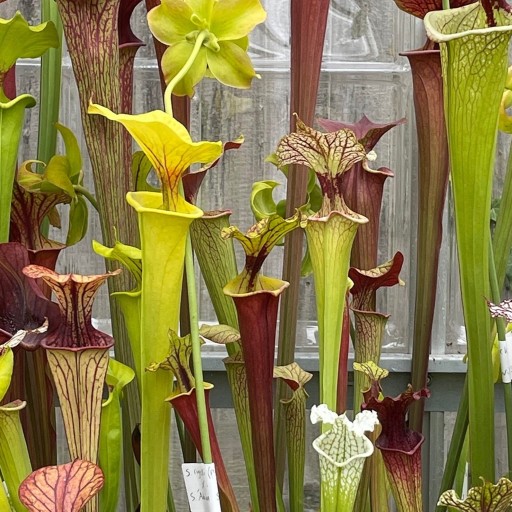
The pitcher of Cobra pitcher plant imitates the shape of a snake head, the nectar glands at the mouth of the pitcher emit an attractive smell, and the translucent patterns on the inner wall make insects mistake it for an exit. When the prey loses its way, it eventually slides into the digestive fluid pool and is blocked by the barbs at the bottom of the pitcher to escape.
Evolutionary code: Why do plants choose to "eat meat"?
The terrible thing about carnivorous plants is not only their hunting methods, but also their subversion of traditional ecological niches. Scientific research shows that this characteristic is the wisdom of survival in extreme environments:
1. Survival game of poor soil
Most carnivorous plants grow in swamps, rocks or acidic soils that are lacking in nitrogen and phosphorus. For example, Nepenthes rajah is only distributed in the serpentine soil area of Borneo. This type of soil has extremely low mineral content, forcing plants to obtain nutrients from animals instead.
2. Genetic "renovation"
DNA research shows that the digestive enzyme genes of carnivorous plants do not come from animals, but from the plant's own defense system. For example, the protease used by ordinary plants to resist pests and diseases is transformed by carnivorous plants into a tool for decomposing prey.
3. The miracle of convergent evolution
The carnivorous characteristic has evolved independently at least 12 times in the plant kingdom, involving different groups such as the Droseraceae, Nepenthesaceae, and Sarraceniaceae. This convergent evolution proves that in an environment with scarce nutrition, "eating meat" is the optimal solution for plants to break through the bottleneck of survival.
Danger and charm coexist: the two-sided nature of carnivorous plants
1. Ecological threat: out-of-control "killers"
Some carnivorous plants are aggressive. For example, the sheep-eating tree native to Chile has flowers with sharp thorns that can trap approaching lambs and absorb nutrients after they die and rot. Local herders have to burn these plants regularly to protect livestock.
2. Gardening darlings: dark aesthetics and scientific value
Despite their dangers, carnivorous plants have become "Internet celebrities" in the gardening world because of their unique shapes. Venus flytraps are highly sought after because they resemble alien creatures, and white rabbit bladderwort is popular in aquarium landscaping because of its cute appearance. At the same time, scientists have developed new adhesives and bionic sensors by studying their hunting mechanisms.
Coexisting with "killers": a guide to home planting
If you want to grow carnivorous plants at home, you need to pay attention to the following points:
Light: Most varieties require sufficient sunlight (such as 6 hours of direct sunlight per day), but avoid exposure to the sun.
Water: Use pure water or rainwater to keep the substrate moist (such as using sphagnum moss for cultivation).
Feeding: Do not feed meat, insects can be fed 1-2 times a month, and overfeeding will cause the plant to die.
Overwintering: Temperate varieties (such as alpine hyacinths) need to hibernate at low temperatures, and tropical varieties (such as pitcher plants) need to be maintained above 15°C.
The "terrible" of carnivorous plants is actually a Jedi counterattack of life in extreme environments. They use sophisticated traps, chemical weapons and evolutionary wisdom to redefine the survival rules of the plant kingdom.
When we gaze at the quietly closing clamps of a Venus flytrap or marvel at the hanging death bottle of a pitcher plant, we not only feel the cruelty of nature, but also understand the tenacity and creativity of life. Perhaps it is this "gentle killing" that makes gardening enthusiasts love and hate these "plant killers" and can't stop.
 1
1 1
1OTHER NEWS
-
- Growing For The Planet: How Sustainable Gardening Practices Can Help To Mitigate Climate Change
- By Prodosh Kundu 28 Oct,2024
-
- Do you know these secrets of plants?
- By LH 18 Feb,2025
-
- How do you control pests and diseases in your garden
- By YL 12 Mar,2025

-
- How Organic Gardening Supplies Can Transform Your Garden And The Environment?
- By Prodosh Kundu 28 Oct,2024

-
- How terrible are carnivorous plants?
- By LH 12 Mar,2025
-
- Sustainable Gardening Starts With Organic Supplies
- By Prodosh Kundu 28 Oct,2024
-
- The Five Best Flowers for Newbies to Keep Alive
- By MTH 14 Mar,2025
-
- 15 kinds of flowers suitable for summer
- By LH 31 Mar,2025
-
- Hydroponic plants, gardening tips
- By LH 02 Apr,2025

-
- Here’s a complete guide on what you should prepare before planting your seeds.
- By Prodosh Kundu 18 Jul,2024
-
- The natural choice for indoor air purification five high-quality greenery recommendations
- By YL 14 Mar,2025
-
- Spring is here! Give Your Garden a New Look with These Gardening Tips
- By MTH 20 Feb,2025