The Truth About Bitcoin!
In the United States, Bitcoin is a big deal, and it's a hot topic on everything from Wall Street to the dinner table of ordinary people. Some people are convinced that it will reshape the future of finance and become a mainstream currency, while others scoff at it as a speculative dream that could be dashed at any time.
So what is Bitcoin all about? How does it work? Is it really capable of replacing traditional currencies like the US dollar that we've been using for years? Today, I'm going to give you the lowdown on Bitcoin in the most straightforward, easy-to-understand terms.
What is Bitcoin?
In 2008, a mysterious guy named Satoshi Nakamoto came up with the concept of Bitcoin, and the following year it was officially born. Bitcoin is a decentralised digital currency that doesn't follow the usual path of banks and governments, but relies on blockchain technology.
What does that mean? It means that all bitcoin transaction records are openly and transparently ‘sun’ on the Internet, no one can secretly change it, just like in the online world to create a super safe, specifically to store electronic cash.
We Americans usually buy things with credit cards, cash, maybe later with bitcoin can also be unimpeded, whether it is to transfer money to a friend, or online shopping payment, and even investment, it can come in handy, the key is that it does not have a physical form, but also not subject to what the central body of the control, free of very much.
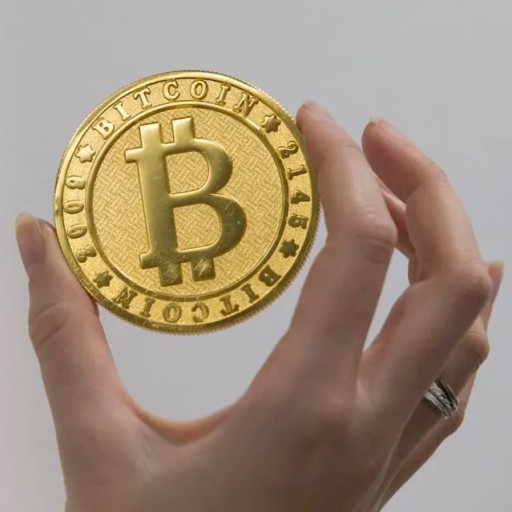
How does Bitcoin work?
The core is in the blockchain this magic technology. Imagine countless computers around the world (let's call them ‘miners’) working together to maintain a super-large ledger, which packages all Bitcoin transaction records into a ‘small package’, that is, a ‘block’.
This book packages all Bitcoin transaction records into small parcels, known as ‘blocks’, which are then strung together in chronological order to form a ‘chain’, which is the blockchain.
The transaction process is a few simple steps: you want to transfer some bitcoins to the next door to the United States, the transaction is instantly spread throughout the bitcoin network like a radio; miners around the world are like a group of super detectives, scrambling to verify the transaction is true or false.
And then stuff it into the new block after verifying that there is no error; and then when the block is securely plugged into the blockchain, hey, the money will be successfully transferred to it, and this whole process saves the banks from these ‘middlemen’ and the ‘middlemen’.
‘The whole process eliminates the need for banks to make a difference in the price, and the fees are less, and it's faster.
How did Bitcoin come about?
It doesn't come from the wind, it comes from ‘mining’. Miners control high-performance computers to solve ultra-complex mathematical puzzles, who first attacked, who will get bitcoins as a reward, this process is similar to bookkeeping, the stronger the arithmetic power, the greater the chances of winning the bookkeeping.
The total number of bitcoins is fixed at 21 million, and every four years, the mining reward is cut in half. Scarcity is expensive, and this scarcity makes the price of bitcoins jump up and down according to supply and demand.
Advantages of Bitcoin
Bitcoin is decentralised: the government and the Federal Reserve are not involved, so the people can trade more freely, without having to look at the bank, and they can decide when to transfer money and how to spend it.
Global circulation: as long as there is a network, no matter which corner of the United States, or run to Europe, Asia travel, bitcoin can be spent at any time, truly global.
Anonymity: you don't need to show your ID information to buy things or transfer money, so you don't have to worry about information leakage as your privacy is covered tightly.
Tampering: the transaction records on the blockchain, once written on the same as carved in stone, can not be changed, thieves, crooks want to get their hands dirty, not even a door, a sense of security.
Scarcity: the total amount of constant, unlike the U.S. dollar, the Federal Reserve prints money from time to time, bitcoin will not be inflationary, the value of the coins in the hand more stable.
Risks of Bitcoin
Price roller coaster: the price of bitcoin is too capricious, within a day, the ups and downs of thousands of dollars is common, investing in it is like riding a roller coaster, the heart is not good can not stand, if you are not careful, the principal will be folded in half.
Policy uncertainty: the U.S. government has not been accurate, a moment to study the regulation, a moment to warn of the risk, other countries are the same, some simply prohibit bitcoin trading, the wind direction of the policy changes, investors panic.
Loss is goodbye: If you accidentally lose the key to the wallet where you store your bitcoins, it's like throwing away the key to the safe in your house, and you can't get your assets back.
Black market worries: anonymity is too strong advantages and disadvantages, some criminals with bitcoin to do illegal activities, such as money laundering, drug trafficking transactions, which can be worried about the regulatory agencies, staring more and more tightly.
Technical threshold is high: we ordinary Americans, no computer and encryption knowledge, understand how to manage bitcoin, how to securely store it is too difficult to operate a little careless, the money will hit the water.
Bitcoin can replace traditional currency?
Although Bitcoin has a lot of flashpoints, but really want to squeeze the dollar and other traditional currencies off the stage, it is difficult as in the blue sky.
In terms of transaction speed and cost, Bitcoin can process up to 7 transactions per second, whereas the old payment giants like VISA can process tens of thousands of transactions per second, which is too big of a difference. Plus, how can the government so easily devolve its power and let the U.S. dollar lose its position?
The Federal Reserve is in control of monetary policy, and it's all about jobs and economic stability, so Bitcoin has a lot of mountains to climb if it's going to be a mainstream payment method. Right now, bitcoin is more like an investment treasure, similar to the ‘digital gold’, people hoarding the value, speculation is okay, daily coffee, pay rent, or the dollar is good.
Future Prospects
Although Bitcoin has a rocky road ahead and many challenges, it is undeniable that it has given the global financial system a ‘brainstorming’. As blockchain technology continues to evolve, a more robust and stable digital currency may emerge one day.
In any case, Bitcoin has rewritten our perception of money and opened the door to financial decentralisation. It's not a con man's trick, nor is it a code for getting rich overnight, it's just a new financial gadget spawned by technology and the market. As for how far it can swim in the long river of history, we will see.
 1
1 1
1OTHER NEWS
-
- Do you know these secrets of plants?
- By LH 18 Feb,2025

-
- From planting to caring for flowers that bloom forever
- By MTH 10 Mar,2025

-
- Here’s a complete guide on what you should prepare before planting your seeds.
- By Prodosh Kundu 18 Jul,2024

-
- 15 kinds of flowers suitable for summer
- By LH 31 Mar,2025

-
- Sustainable Gardening Starts With Organic Supplies
- By Prodosh Kundu 28 Oct,2024

-
- What are the most ugly plants in the gardening world?
- By LH 09 Apr,2025

-
- How terrible are carnivorous plants?
- By LH 12 Mar,2025

-
- How Organic Gardening Supplies Can Transform Your Garden And The Environment?
- By Prodosh Kundu 28 Oct,2024

-
- Is the smell of mowing the grass a distress signal from plants?
- By LH 21 Feb,2025

-
- Hydroponic plants, gardening tips
- By LH 02 Apr,2025

-
- How do you control pests and diseases in your garden
- By YL 12 Mar,2025

-
- Have you ever seen a magical plant that can grow by drinking air?
- By LH 14 Mar,2025