Experience comparison: Comprehensive analysis of the advantages and disadvantages of nursing homes vs. home-based elderly care
When parents age, how to provide for their parents has become an unavoidable problem for countless families. Should parents be sent to a nursing home with complete facilities, or should they enjoy their old age in a familiar home?
The two seem to be simple choices, but in fact they involve many factors such as living habits, psychological comfort, medical support and even family ethics. This article will start from real experience and deeply analyze the advantages and disadvantages of "nursing home care" and "home-based elderly care" to help each family make a more suitable choice for themselves.
1. Living environment: familiarity VS professionalism
The advantage of home-based elderly care lies in "familiarity". For many elderly people, home is not just a living space, but also a precipitation of many years of memories. Familiar furniture, neighbors, and alleys are a kind of emotional sustenance.
Especially for introverted elderly people who are not good at adapting to new environments, home-based elderly care can bring a higher sense of psychological security.
And nursing homes are more "professional environments". Good nursing homes are usually equipped with barrier-free passages, non-slip floors, emergency call buttons, regular inspections and other facilities, which greatly reduce the risk of falls or emergencies when the elderly are alone at home.
For the elderly who are old, have difficulty in moving, and suffer from chronic diseases, the living environment of nursing homes is more protective and scientific.
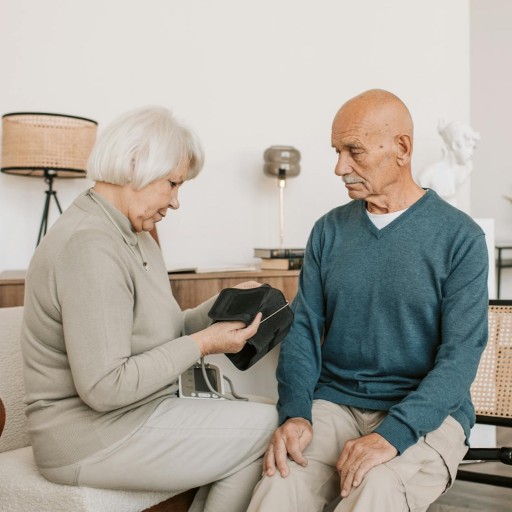
2. Daily care: family companionship VS professional care
The core advantage of home-based elderly care lies in "family companionship". Children can go home to visit every day, even if it is just for a meal and a chat, it can greatly meet the emotional needs of the elderly.
In addition, some home-based elderly care is also combined with "home care services", and nannies and nurses can be hired to take care of them at home, but the service level is uneven and requires frequent supervision by family members.
The strength of nursing homes is "professional care". Whether it is daily living, diet and nutrition, or medication management, rehabilitation training, nursing homes have complete service processes and team support. Especially for elderly people living alone or families without children to care for them, nursing homes have become a realistic and effective choice.
But the disadvantages are also obvious: the "institutional management" of some nursing homes makes the elderly feel "locked up" and lose their freedom and initiative; and due to insufficient staff and heavy workload, nursing staff sometimes have the problem of "mechanized care".
3. Medical support: response speed VS resource integration
The medical support for home-based elderly care mostly relies on community hospitals, but it is often difficult to respond in time when facing sudden illnesses. Especially in remote cities and even rural areas, medical resources are already tight, and it is difficult for the elderly to be sent to the doctor after they are sick, which has become a major concern.
In contrast, high-quality nursing homes are usually equipped with "medical and nursing combined" services. For example, they are equipped with 24-hour resident doctors, emergency equipment, and even green channel cooperation with nearby better hospitals, so that they can be quickly transferred in case of emergencies.
This is especially important for elderly people with hypertension, diabetes, stroke history, etc.
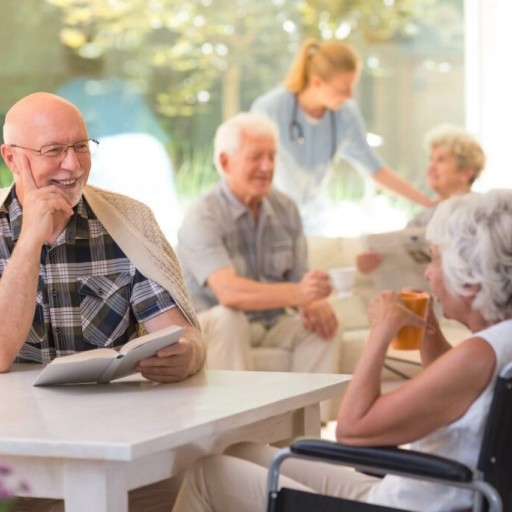
4. Social and spiritual life: loneliness risk VS social circle reconstruction
Many people worry that the elderly will become lonely when they live in nursing homes. In fact, on the contrary, many nursing homes regularly hold cultural and entertainment activities, interest classes, and group discussions to give the elderly a new social circle.
Especially for the elderly who are extrovert and love to be lively, it may even be more fulfilling and interesting than living at home.
Home-based care is prone to "social discontinuity", especially when children are busy with work and neighbors are distant, the elderly are prone to loneliness and even develop mild depression. Although it can be alleviated through community activities, the resources are limited, the participation threshold is high, and the effect is not stable.
5. Economic cost: expenditure comparison and hidden expenses
In the final analysis, the choice of elderly care depends on the "pocket".
The explicit cost of home-based care is low, and there is no need to pay bed fees or service fees. However, if you hire a nurse or hire a long-term caregiver, the monthly expenditure is not cheap, and there are management risks.
The cost of nursing homes is relatively transparent. The monthly cost of high-end nursing homes may be expensive, but there are also low- and medium-end institutions to choose from. The cost includes food, accommodation, care, medical care, etc. Although the amount is not small, it saves the care burden and risk of family members.
6. Emotion and ethics: Is it a "conscience question" to send or not?
Many children are reluctant to send their parents to nursing homes, mainly out of "guilt" and traditional concepts. In the eyes of some people, "sending them to a nursing home is equal to being unfilial", however, true filial piety is not about form, but about whether the most suitable lifestyle is provided for the elderly.
If parents are cheerful and in good health, then home-based care is indeed more warm; but if the elderly need round-the-clock care or are suffering from multiple diseases, it is better to choose a suitable nursing home to ensure the quality of life instead of "wasting" at home.
7. Conclusion: There is no perfect solution, only a more suitable choice
"Nursing home VS home-based care" is not a choice between one or the other, nor is it a moral kidnapping of filial piety, but a dynamic matching process. The physical condition, personality habits, economic ability, and children's conditions of each elderly person are different, and there is no "unified answer".
Perhaps, the way of home-based care + community service is suitable for now; a few years later, entering an institution + regular visits may be more secure. The key is whether we really "understand the needs of our parents" instead of just thinking from our own perspective.
In the future, with the development of smart elderly care and digital medical care, "elderly care at home is more secure, and elderly care in hospital is more professional" may become possible. But at present, please carefully evaluate and communicate attentively, and choose an elderly care method that can make your parents feel at ease and yourself feel at ease.
 1
1 1
1OTHER NEWS
-
- How to Choose the Best Lawn and Landscaping Services for Your Home
- By Prodosh Kundu 28 Aug,2024

-
- 15 kinds of flowers suitable for summer
- By LH 31 Mar,2025

-
- How terrible are carnivorous plants?
- By LH 12 Mar,2025

-
- Hydroponic plants, gardening tips
- By LH 02 Apr,2025

-
- Sustainable Gardening Starts With Organic Supplies
- By Prodosh Kundu 28 Oct,2024

-
- The Five Best Flowers for Newbies to Keep Alive
- By MTH 14 Mar,2025

-
- How Organic Gardening Supplies Can Transform Your Garden And The Environment?
- By Prodosh Kundu 28 Oct,2024

-
- From planting to caring for flowers that bloom forever
- By MTH 10 Mar,2025

-
- Do you know these secrets of plants?
- By LH 18 Feb,2025

-
- Spring is here! Give Your Garden a New Look with These Gardening Tips
- By MTH 20 Feb,2025

-
- The natural choice for indoor air purification five high-quality greenery recommendations
- By YL 14 Mar,2025

-
- How do you control pests and diseases in your garden
- By YL 12 Mar,2025