Mouth breathing: the invisible culprit that affects appearance and health!
In daily life, we tend to overlook some seemingly small but crucial health details, one of which is our breathing method. Most people habitually breathe through their noses, but some people, due to various reasons, such as nasal congestion, allergies, habits or abnormal anatomical structures, will unconsciously adopt mouth breathing.
This seemingly harmless breathing habit actually hides a profound impact on appearance and health, and can be called an "invisible culprit".
Mouth breathing: a silent killer of appearance
1. Changes in facial structure
Long-term mouth breathing can lead to significant changes in facial bone and muscle structure. Childhood is particularly critical because the facial bones are in a stage of rapid development.
Mouth breathing causes the tongue to move downward and no longer close to the upper palate, which in turn affects the normal development of the maxilla, and may lead to problems such as narrow maxilla, retracted chin (commonly known as "underbite"), and elongated face.
These changes not only affect appearance, but may also cause oral problems such as malocclusion and crowded teeth, requiring complex orthodontic treatment in the later stage.
2. Relaxation of soft tissues
Mouth breathing also affects the development of facial soft tissues, including the muscles around the lips, cheeks, and chin. Air that lacks nasal filtering and moistening directly impacts the mouth and face, causing thickening and drying of the lips, loose facial muscles, and lack of firmness.
These changes are also seen in adolescents and adults. Although they are not as irreversible as in childhood, they still need to be taken seriously.

Health risks: from breathing to the whole body
1. Sleep disorders
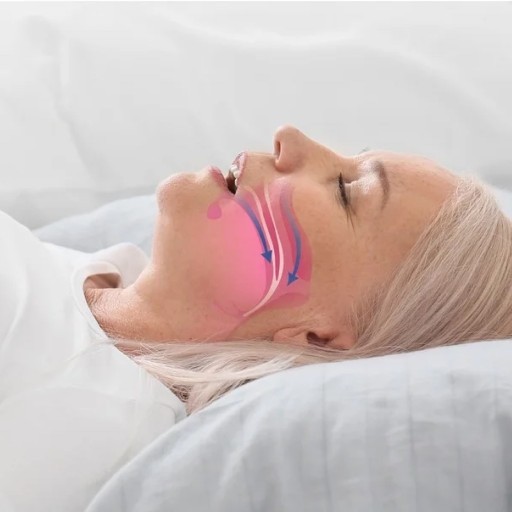
There is a close connection between mouth breathing and sleep disorders. Mouth breathing at night may lead to insufficient oxygen intake, affect sleep quality, and even cause obstructive sleep apnea (OSA).
OSA patients will experience repeated apnea during sleep, resulting in decreased blood oxygen saturation, daytime sleepiness, and lack of concentration. In the long run, they may also increase the risk of chronic diseases such as hypertension and heart disease.
2. Respiratory system problems
As the first line of defense of the respiratory system, the nasal cavity has the function of filtering, humidifying, and heating the inhaled air. Mouth breathing bypasses this natural defense mechanism, allowing dry, unpurified air to directly enter the lower respiratory tract, increasing the risk of respiratory diseases such as colds and pharyngitis.
In addition, mouth breathing may also aggravate asthma symptoms and affect the overall health of the respiratory system.
3. Damage to oral health
Mouth breathing not only affects facial beauty, but also directly threatens oral health. Dry air can easily cause dryness and inflammation of the oral mucosa, increasing the risk of oral ulcers. At the same time, mouth breathers are often accompanied by dry mouth symptoms, which reduces the secretion of saliva.
Saliva is an important substance for maintaining oral acid-base balance and cleaning teeth. Without saliva protection, teeth are more susceptible to caries, and gums may also become inflamed and bleed.

4. Psychological and behavioral effects
Long-term mouth breathing may also have a negative impact on the individual's psychology and behavior. Due to the decline in sleep quality, patients may have problems such as inattention, memory loss, and mood swings, which affect learning and work efficiency and even lead to social disorders.
Children and adolescents may also develop inferiority complexes and affect their mental health development.
How to deal with mouth breathing?
1. Identify the cause and treat it symptomatically
First, the specific cause of mouth breathing should be identified, such as allergic rhinitis, adenoids hypertrophy, etc., and seek the help of professional doctors for targeted treatment. For children, early intervention is particularly important.
Orthodontic treatment, breathing training and other methods can be used to improve breathing habits and promote normal facial development.
2. Breathing training and habit adjustment
Through professional breathing training, such as abdominal breathing and nasal breathing exercises, individuals can be helped to re-establish the correct breathing pattern. At the same time, in daily life, you should consciously remind yourself to breathe through your nose, especially in a quiet state, such as reading and resting.
3. Keep the nasal cavity unobstructed
For people who have to breathe through their mouths due to nasal congestion, it is very important to keep the nasal cavity unobstructed. You can use physiological saline to clean the nasal cavity to reduce the retention of allergens and germs; in the dry season, using a humidifier to maintain indoor humidity can also help relieve nasal dryness.
4. Regular monitoring and evaluation
For children, parents should regularly take their children for oral and facial development assessments to promptly detect and correct mouth breathing problems. Adults should also pay attention to their breathing habits. If necessary, they can consult a professional doctor for respiratory function tests.
Mouth breathing, this seemingly insignificant habit, actually poses a potential threat to our appearance and health. Through scientific understanding, timely intervention and continuous self-management, we can effectively avoid its negative effects and protect our health and beauty.
 1
1 1
1OTHER NEWS
-
- What are the most ugly plants in the gardening world?
- By LH 09 Apr,2025

-
- How terrible are carnivorous plants?
- By LH 12 Mar,2025

-
- From planting to caring for flowers that bloom forever
- By MTH 10 Mar,2025

-
- Vigilance! Keeping these kinds of plants indoors may harm your health
- By ZYY 09 Apr,2025

-
- Here’s a complete guide on what you should prepare before planting your seeds.
- By Prodosh Kundu 18 Jul,2024

-
- How do you control pests and diseases in your garden
- By YL 12 Mar,2025

-
- Sustainable Gardening Starts With Organic Supplies
- By Prodosh Kundu 28 Oct,2024

-
- Do you know these secrets of plants?
- By LH 18 Feb,2025

-
- The natural choice for indoor air purification five high-quality greenery recommendations
- By YL 14 Mar,2025

-
- Have you ever seen a magical plant that can grow by drinking air?
- By LH 14 Mar,2025

-
- Is the smell of mowing the grass a distress signal from plants?
- By LH 21 Feb,2025

-
- The Five Best Flowers for Newbies to Keep Alive
- By MTH 14 Mar,2025