In front of big data, do we still have privacy?
Sometimes, you are not also have this feeling: just chat with friends to travel, turn your head to open the social software, see a bunch of travel ads; you check the cold medicine, the next few days of the news page is full of health product recommendations. You didn't talk, you didn't search, but your cell phone “guessed” what you were thinking like a psychic.
We are accustomed to say “now is the era of big data”, but rarely stop to ask: in such an era, we still have how much privacy can be said?
How does big data “steal” our information?
Let's not talk about the advanced technology, let's start from the daily life. When you install an app on your phone, it may ask you: Do you allow access to your location? Does it read contacts? Does it allow background refreshing? It may seem like just a few clicks, but you've actually quietly opened a door to information.
Every time you enter a keyword in the search box, every time you like, favorite, and even the time you stay, the platform collects your “behavioral data”.
Behind these data is a sophisticated algorithmic model in your “portrait” - what age group you are, where you live, what you like to eat, what kind of video you like to watch, what time in the morning is the most likely to impulse spending ... ... ...Habits you may not even notice yourself, but they know better than you do.
To put it bluntly, in front of big data, you are not a person, but a “collection of labels”. And these labels, once integrated, analyzed, sold, not just the precise placement of advertising so simple.
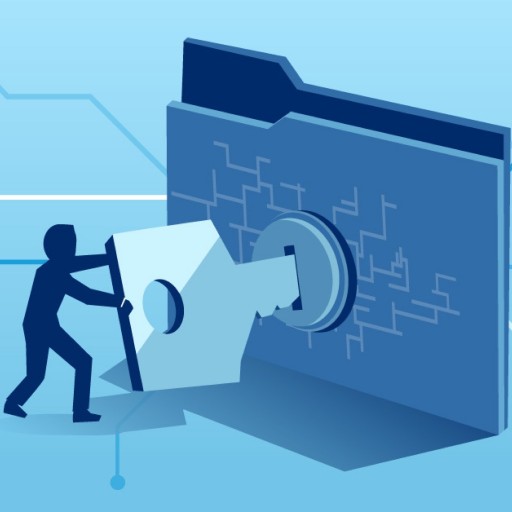
In the United States, “privacy” is also more and more false!
Many people may think that privacy anxiety occurs more in countries with lax regulations. But the reality is that in the United States, the place that used to emphasize “individual freedom” and “information rights”, privacy is also being diluted step by step.
Facebook was fined 5 billion dollars for leaking user data, but have you ever thought that the data that was not leaked has already been legally “shared”?
For example, the Patriot Act gives the government the right to access citizen data without notice under certain circumstances, and many commercial platforms have written in their “user agreements” that we will share some of our data with our partners - but you didn't read it. -You just don't read them.
Take credit scoring systems, for example, where everything from spending history to rental history to school loan information is packaged as a “score. A late payment can affect not only your interest rate, but also your ability to rent an apartment.
With AI becoming more and more predictive, your past is no longer private, and your future may not be up to you.
It's not “being seen” that's scary, it's “being decided”
Some people say, “I didn't do anything bad, so what if I'm known?” But the problem is that Big Data doesn't just record, it decides.
The information you see is filtered by algorithms - your view of the world is “customized”; you apply for a loan, and the other party uses a model to assess your risk level - you may never have a chance to explain yourself; you are automatically evaluated by a resume system; and you may never have a chance to explain yourself.
You're automatically brushed off by the resume system, or recommended by an algorithm to a certain kind of content that you can't get out of - you're not actively choosing, you're being quietly pushed around.
On TikTok and Instagram, the algorithms are constantly recommending the same type of content for the kind of videos you like. Over time, we live in a cocoon of information that is more and more “like us”, not seeing the outside world, and forgetting that we can change our tastes.
This filtering mechanism is especially dangerous for the discussion of political and social issues. Algorithm-driven polarization is fracturing the American court of public opinion - people are more likely to believe that “what I see is the truth” than to think “what I don't see”.

What else can we do?
It does sound a bit desperate. But it's not completely hopeless. At the very least, realizing the problem is a start.
Look at the boundaries of your authorization
Every time you install an app and create an account, take a few seconds to see if the permissions it's requesting make sense. A flashlight app, for example, really doesn't need to read your address book.
Clean up your “digital footprint” regularly
Clearing your browsing history, restricting tracking permissions, and disabling unnecessary GPS functions is not a waste of time, it's a way to “leave less of a footprint” on your data.
Use privacy tools
Chrome's incognito mode, engines like DuckDuckGo that don't track search history, or encrypted communication programs like Signal are all ways to combat tracking.
Support stronger data protection legislation
The United States does not currently have a nationally harmonized Data Protection Act, but California's Consumer Privacy Act (CCPA) is a starting point. Keeping an eye on policy trends and supporting stronger legislation is the long-term solution.
Develop “information literacy”
Don't trust recommendations, don't believe in “guessing your favorites,” and proactively cross-circle information in order not to be locked out of the world by algorithms.
It's not true that we have “no more privacy”.
Big data is not evil, it does make a lot of things more convenient, smarter - but we must understand that technology is not neutral, there is a pair of “invisible hand” behind.
We can not completely disconnected from the network, it is impossible to do the information all closed, but we can fight for the “right to know” and “the right to choose”. Don't let your every click become someone else's control of your behavior.
Privacy is not a luxury, but our basic dignity as modern people. May we still be able to retain a little bit of freedom to “make our own life” in the flood of data.
 1
1 1
1OTHER NEWS
-
- The Five Best Flowers for Newbies to Keep Alive
- By MTH 14 Mar,2025

-
- Here’s a complete guide on what you should prepare before planting your seeds.
- By Prodosh Kundu 18 Jul,2024

-
- Vigilance! Keeping these kinds of plants indoors may harm your health
- By ZYY 09 Apr,2025
-
- 15 kinds of flowers suitable for summer
- By LH 31 Mar,2025

-
- Spring is here! Give Your Garden a New Look with These Gardening Tips
- By MTH 20 Feb,2025

-
- Hydroponic plants, gardening tips
- By LH 02 Apr,2025

-
- From planting to caring for flowers that bloom forever
- By MTH 10 Mar,2025

-
- Do you know these secrets of plants?
- By LH 18 Feb,2025

-
- How do you control pests and diseases in your garden
- By YL 12 Mar,2025

-
- Have you ever seen a magical plant that can grow by drinking air?
- By LH 14 Mar,2025

-
- How terrible are carnivorous plants?
- By LH 12 Mar,2025

-
- What are the most ugly plants in the gardening world?
- By LH 09 Apr,2025